Home Shop Cart Shop the range

Certified compostable caddy liners that break down in 180 days, not centuries

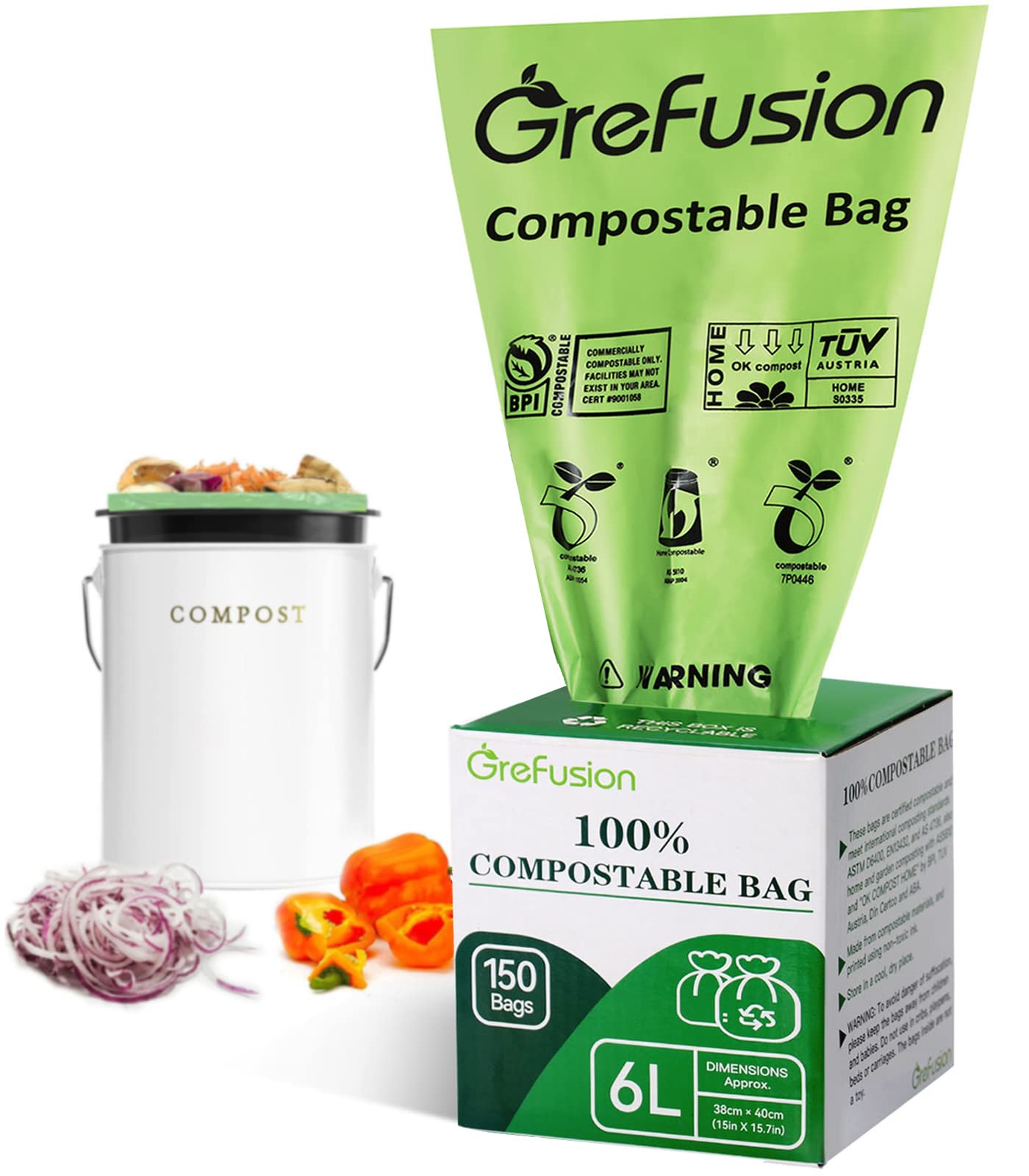
GreFusion’s 6L caddy liners are certified compostable under EN 13432 and ASTM D6400, degrading fully within 180 days.

150 leak-proof bags per pack, sized for standard kitchen caddies, replacing single-use plastic without compromising on strength.

£17.71 inc. VAT
Fast, FREE United Kingdom delivery on all orders £75 or more. Orders under £75 pay a flat £5.99 delivery.

150 compostable caddy liner bags per pack, sized 6 litres to fit standard kitchen compost caddies. Certified under European standard EN 13432 and US standard ASTM D6400 for genuine compostability, not just marketing language.

Secure CheckoutCard details never touch our servers
Honest AdviceAsk us anything before you buy
Free ShippingMinimum spend required
Easy ReturnsHassle free returns & refunds
150 compostable caddy liner bags per pack…150 compostable caddy liner bags per pack, sized 6 litres to fit standard kitchen compost caddies.
Certified under European standard EN 13432 and US…Certified under European standard EN 13432 and US standard ASTM D6400 for genuine compostability, not just marketing language.
Leak-proof and eco-friendly…Leak-proof and eco-friendly, keeping your kitchen bin clean without the need to wash it daily.

GreFusion Compostable Caddy Liners, 6 Litre x 150 Bags

A compost bin is only as clean and low-maintenance as what you line it with, and GreFusion’s caddy liners are built to remove the "wash it every day" chore that comes with an unlined bin, while genuinely composting away afterward rather than sitting in landfill as another piece of plastic. Each pack contains 150 liners, sized for standard 6-litre kitchen caddies, giving months of daily use from a single order.

The certification detail matters more than it might seem: EN 13432 (European) and ASTM D6400 (US) are recognised standards specifically for compostability, not just biodegradability — a distinction that separates genuine compostable products from bags that merely break into smaller plastic fragments over time without ever fully disappearing. GreFusion’s liners are certified to fully degrade to humus, CO2 and water within 180 days in a standard compost pile.

Leak-proof construction is the practical payoff day to day: a liner that holds together through wet food scraps means you’re not wiping out the caddy after every use, while still knowing the bag itself will disappear along with its contents once it reaches a compost environment — unlike a standard plastic liner that would need removing before the food waste can compost.

Specifications

BrandGreFusion
Capacity6 litres
Unit Count150 count
Item Weight820 Grams
MaterialPaper, Plastic
ColourGreen
Material FeaturesBiodegradable, Compostable, Natural, Plant Based, Recyclable

GreFusion Compostable Caddy Liners, 6 Litre x 150 Bags

£17.71 inc. VAT

Free United Kingdom delivery · easy returns · secure checkout

Frequently Asked Questions

What is the difference between biodegradable and compostable?

"Biodegradable" is loosely regulated and can take decades. "Compostable" with EN 13432 / ASTM D6400 certification means independently tested to fully break down into water, CO2 and biomass within a defined timeframe, with no toxic residue.

How long do the bags take to break down?

They’re certified to degrade fully within 180 days in a standard compost pile or active composting environment.

What size caddy do they fit?

They’re sized for standard 6-litre kitchen compost caddies, with 150 bags per pack.

Are they leak-proof?

Yes — leak-proof construction means you don’t need to wash your caddy out daily, while the bag itself remains fully compostable.

Can I use these with an electric composter?

Use them for collecting scraps in your kitchen caddy, then empty the contents into your electric composter — check your specific unit’s instructions before adding the bag itself directly to a processing cycle.

What does delivery cost and how long does it take?

Delivery cost and an estimate for your address are shown at checkout before you pay. Free delivery applies over the qualifying order value.

Compostable bags explained: what actually breaks down and what doesn’t

4 min read EcoGrind

"Biodegradable" and "compostable" get used almost interchangeably in casual conversation, but they mean genuinely different things — worth understanding before choosing a caddy liner.

Biodegradable vs compostable: the actual difference

"Biodegradable" is a loosely regulated term that can technically apply to anything that eventually breaks down, even if that takes decades and leaves microplastic fragments behind. "Compostable" is a more specific, and in the case of certified products like this one, independently verified claim: the material fully breaks down into water, CO2 and biomass (humus) within a defined timeframe under composting conditions, leaving no toxic residue or persistent fragments. Certification under EN 13432 or ASTM D6400 means a product has actually been tested against those specific criteria, not just labelled optimistically.

Why the certification numbers matter

EN 13432 is the European standard for packaging recoverable through composting, and ASTM D6400 is its US equivalent — both require independent lab testing confirming the material disintegrates and biodegrades within set timeframes without leaving harmful residue. A bag carrying both certifications, like GreFusion's, has cleared two separate, rigorous testing regimes, which is a meaningfully stronger claim than an uncertified bag simply labelled "eco-friendly" or "biodegradable" with no testing standard behind it.

What 180 days in a standard compost pile actually means

The 180-day figure assumes the bag ends up in an active composting environment — whether that's a home compost heap, a council food waste collection that processes to industrial composting standards, or (for the electric composters in this collection) mixed into finished output that later goes into outdoor composting. A compostable bag sitting in a normal landfill won't necessarily break down on the same timeline, since landfill conditions differ significantly from active composting conditions.

Using liners with an electric composter vs a traditional compost pile

If you're using a caddy liner to collect scraps before feeding an electric composter (like the units elsewhere in this collection), check the liner is compatible with the composter's processing cycle — some electric units are designed to process food waste alone without a liner bag included, so use the caddy liner for kitchen collection and empty the contents directly into the composter rather than adding the bag itself unless the manufacturer confirms it's compatible.

Storage and shelf life

Compostable bags are designed to start breaking down under composting conditions specifically — warmth, moisture and microbial activity — not simply from time in a drawer. Stored in a cool, dry place away from direct sunlight, a pack of unused liners has a reasonably long shelf life before use, though it's sensible to use them within a year or two of purchase for best performance.

Browse all accessories & filters

GreFusion Compostable Caddy Liners, 6 Litre x 150 Bags £17.71