The complete guide
Real microbial compost vs dehydrated pre-compost: what’s the actual difference
"Composter" gets used for two genuinely different kinds of appliance, and knowing which one you're buying changes what you get at the end.
Two different processes, two different outputs
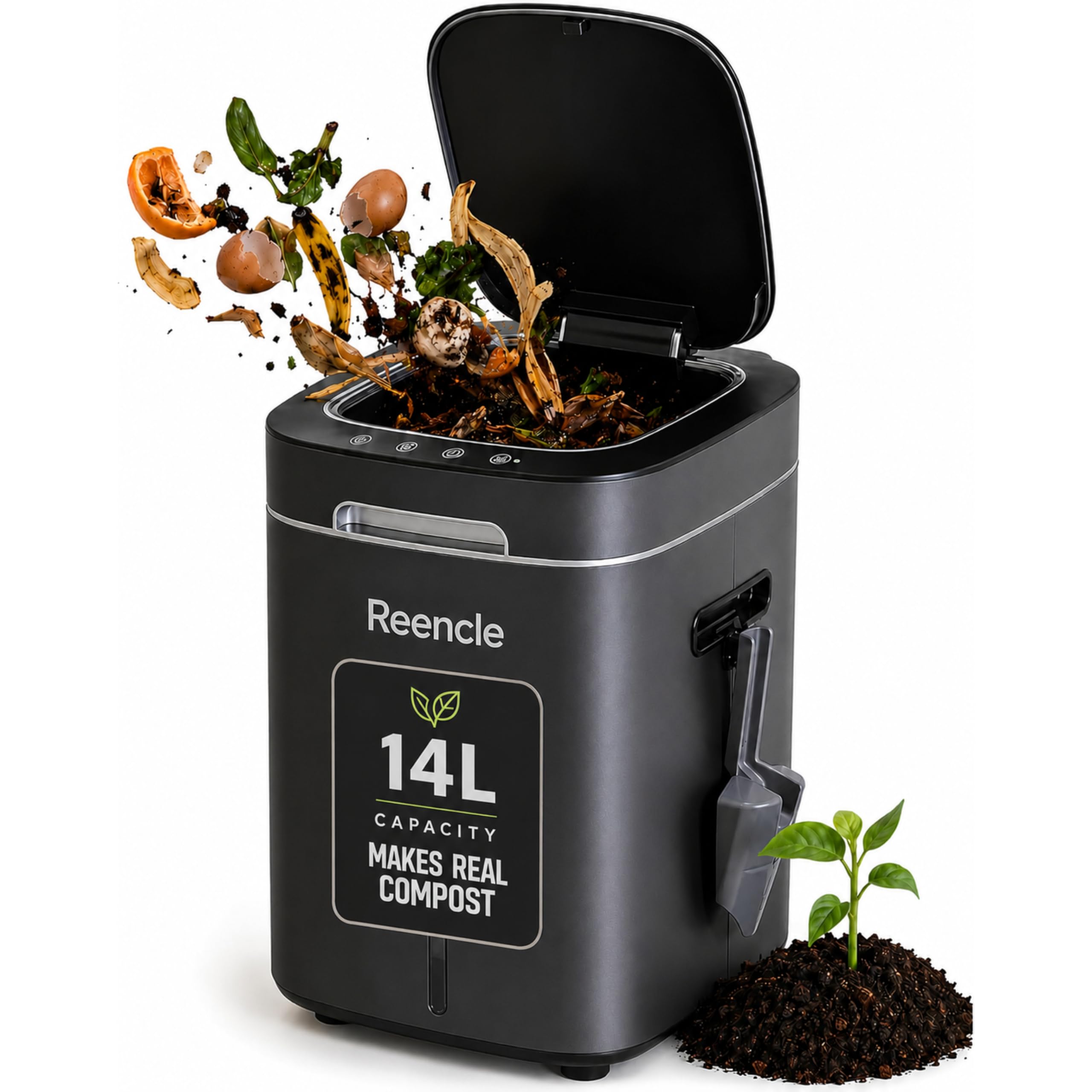
Most electric composters, including several others in this range, work by drying and grinding: high heat removes moisture, blades reduce volume, and the result is a dry, shrunk version of your food scraps — useful as a soil amendment mixed in at a low ratio, but not compost in the traditional sense, because nothing has actually decomposed. The Reencle works differently: it seeds each load with live microbes that biologically break the material down, the same fundamental process as a traditional outdoor compost heap, just contained and accelerated. After 24 hours of active processing and roughly three weeks of curing, what comes out the other end is genuine, finished compost.
Why this distinction matters for how you use it
Dried pre-compost from a grind-and-dry unit needs to be mixed into existing soil or an outdoor compost pile at a low ratio (roughly 1:10) because it is still raw, dehydrated organic material that would otherwise draw moisture from surrounding soil or burn young roots if applied directly. Finished microbial compost from the Reencle can go straight into planters and garden beds in the same way you'd use bagged compost from a garden centre, because the decomposition that makes compost safe and beneficial for plants has already happened.
What that trade-off costs you
The trade-off is time and a bit of patience: a 24-hour Reencle cycle plus a three-week cure is slower to a usable end product than a same-day dried cycle from a grind-and-dry machine, even though the Reencle's daily processing (up to 1kg) happens continuously in the background. If you want fast turnover and don't mind mixing the output into soil yourself, a drying unit is the quicker route. If you want to end up with compost you can use exactly like a bag from the garden centre, the microbial route is the one that actually gets you there.
Living with a microbial composter day to day
Because the process is biological rather than purely mechanical, keeping the microbial culture healthy matters — avoid dumping in anything that would harm the microbes (excessive salt, oil, or chemical residues) and follow the included starter pack instructions when first setting it up. The 3-layer carbon filtration and 28dB operation mean this is designed to be a genuinely permanent kitchen fixture rather than something to run occasionally and tuck away.